How I Traveled 13 Months Around the World for Less Than $15,500
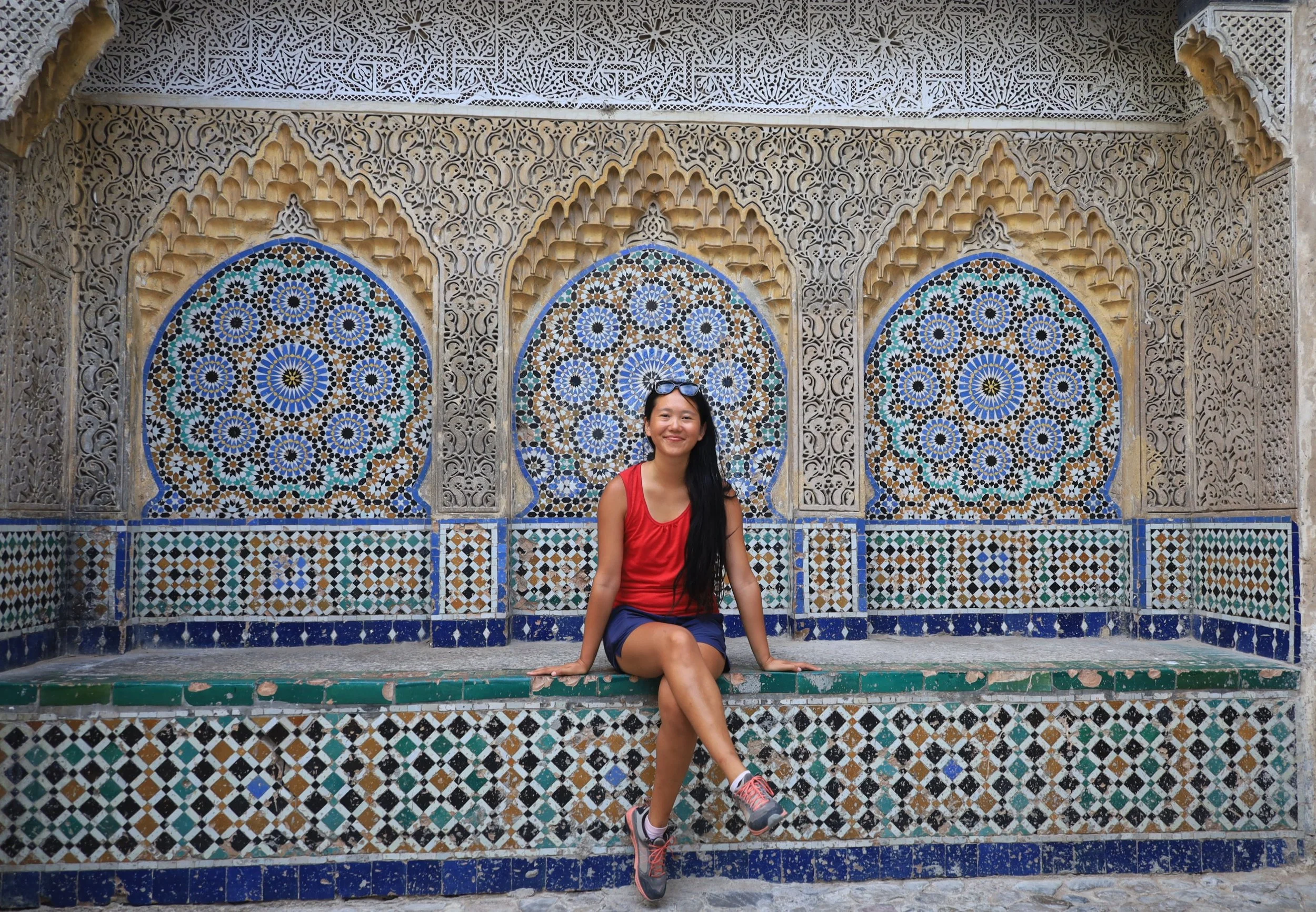
In July 2023 I quit my job and embarked on my longest journey yet: 18 countries in 13 months as a solo female traveler.
My goal was to travel east for roughly one year until I made a full circle around the world, while shifting to stay in warm-ish climates so I wouldn’t need to pack heavy winter clothes. My first around-the-world trip in 2017 going westward clocked in at $13,000 USD over 4 months.
This time I destroyed my old record by completing 13 months with only $15,473 USD! That’s under $39/day!
Let’s dig into the numbers to see where it all went:

Food: $4930
Accommodations: $2679
Travel By Air: $422 + $1867 cash-equivalent of airline points redeemed at suboptimal rates, including one business class flight
Travel by Land & Water (trains, buses, vehicle rentals, taxis, ferries): $2081
Fun Activities (tourist admission fees, concerts, festivals): $1483
Extreme Sports (SCUBA diving, kitesurfing, wakeboarding): $838
Shopping (including a new suitcase to fit more souvenirs): $581
Miscellaneous (SIM cards, visas, shoe insole replacements every month): $440
Health & Wellness (massages, spas, one doctor’s visit): $152
By the way, I’m communicating in USD because not everyone can automatically conceptualize how much our Canadian “pesos” are worth 🤡
As a data nerd in both a personal and professional context, I track, categorize, and analyze my travel spending religiously. I have spreadsheets from trips dating back to 2014. However, the intent of counting every penny is not to scour the books for ways to cut back on spending.
I already know that food is my biggest weakness and I’ll do whatever it takes to try new delicacies.
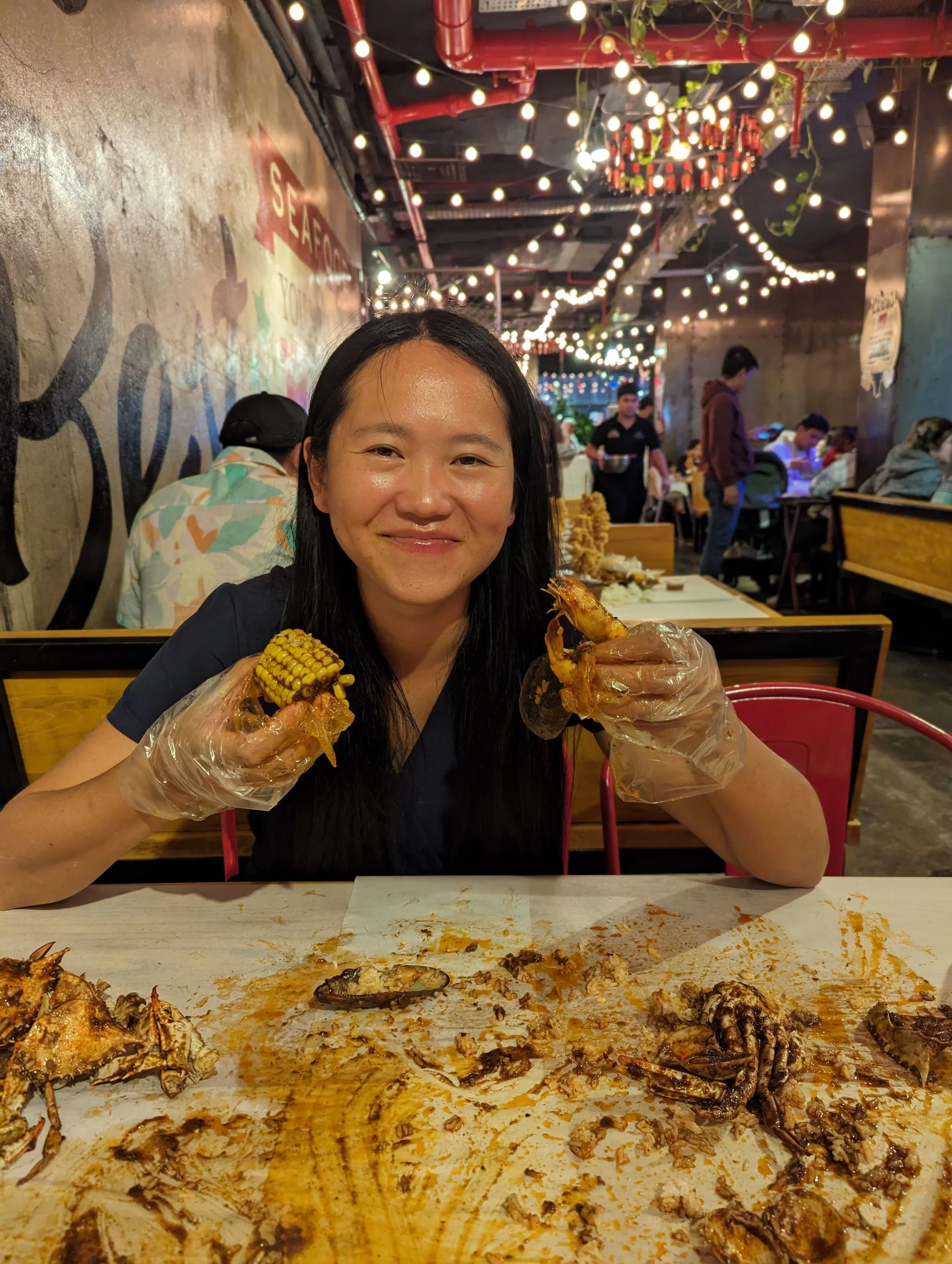
Happiness at 100% when polishing off a Filipino seafood grill in Abu Dhabi
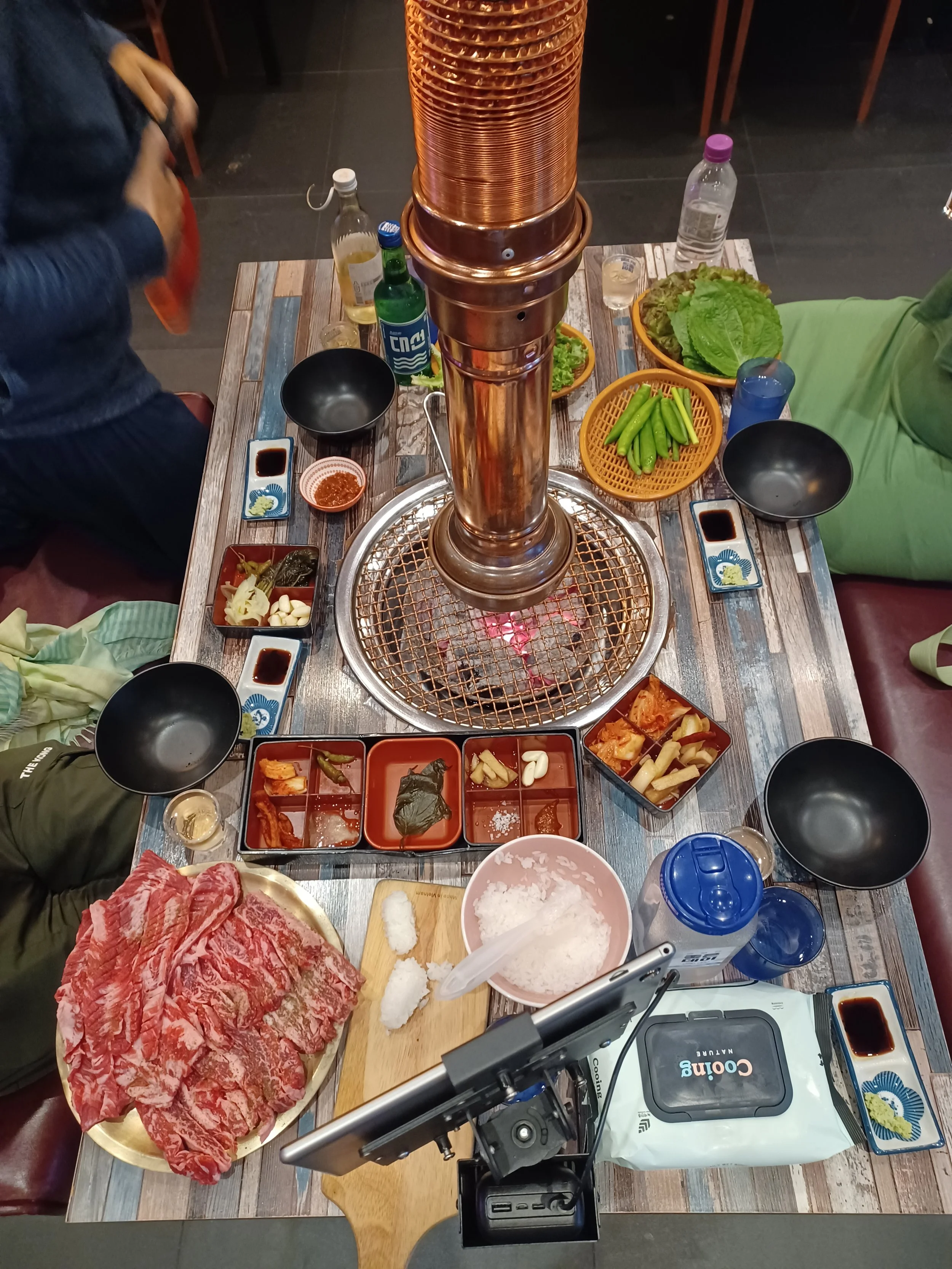
I consistently ate so well in South Korea that I had a gallbladder attack on my last day… worth it 😭
I just think tracking expenses is a good habit, and it’s fun to look back on a travel diary made of numbers.
The data can tell stories about each culture, what they value, how their infrastructure is organized, and what you enjoyed the most in each location.
One of my top priorities in every country is to hunt down tropical fruits that taste utterly divine compared to the unripe bottom-shelf scraps sold in the average Canadian grocery store.
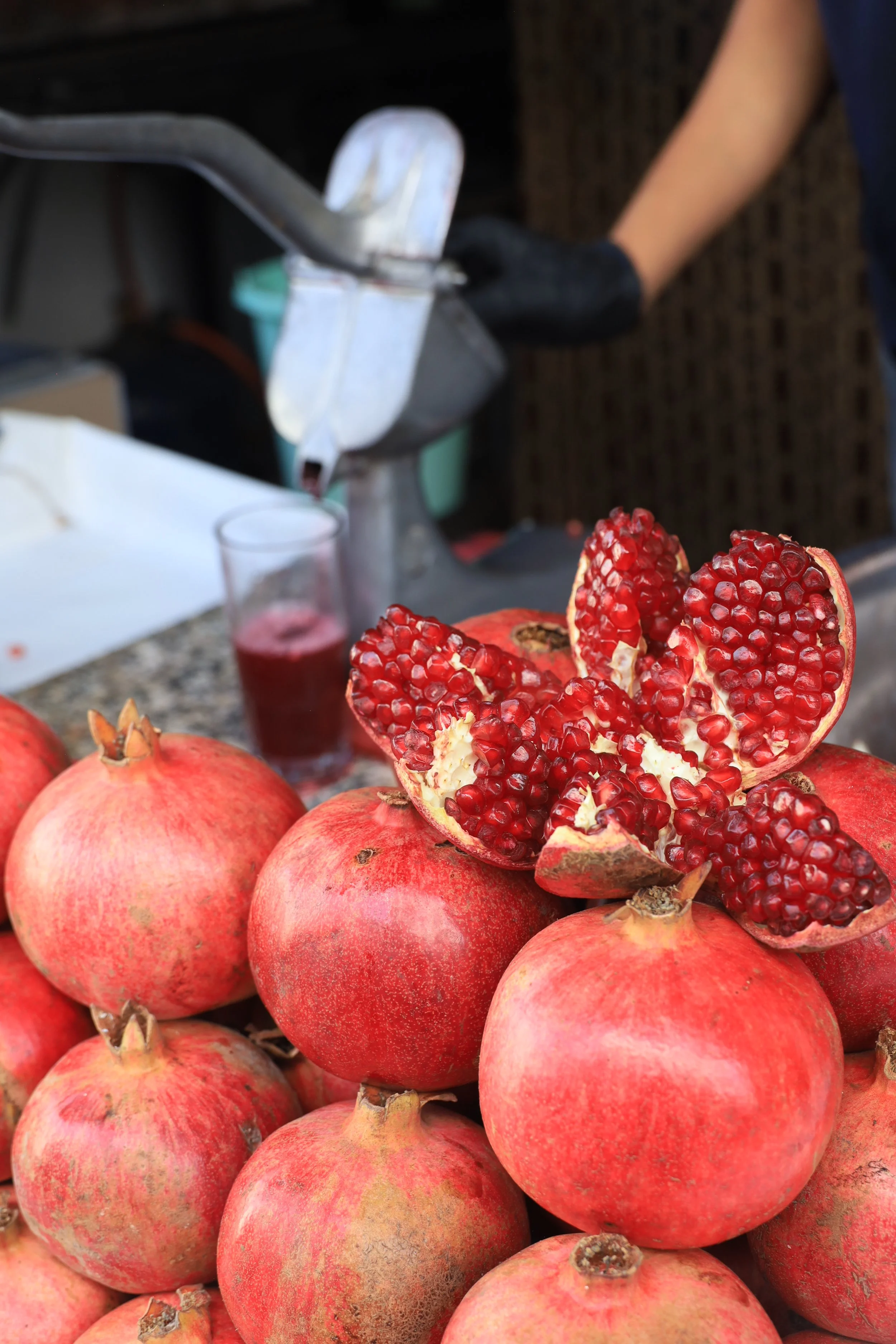
Pomegranates in Morocco have smaller, softer seeds so you can extract more juice or eat by the mouthful without spitting out crunchy fat seeds. According to my tracker, pomegranate juice was both the first and last thing I bought in Morocco, and the top choice from 12 out of 23 juice purchases.
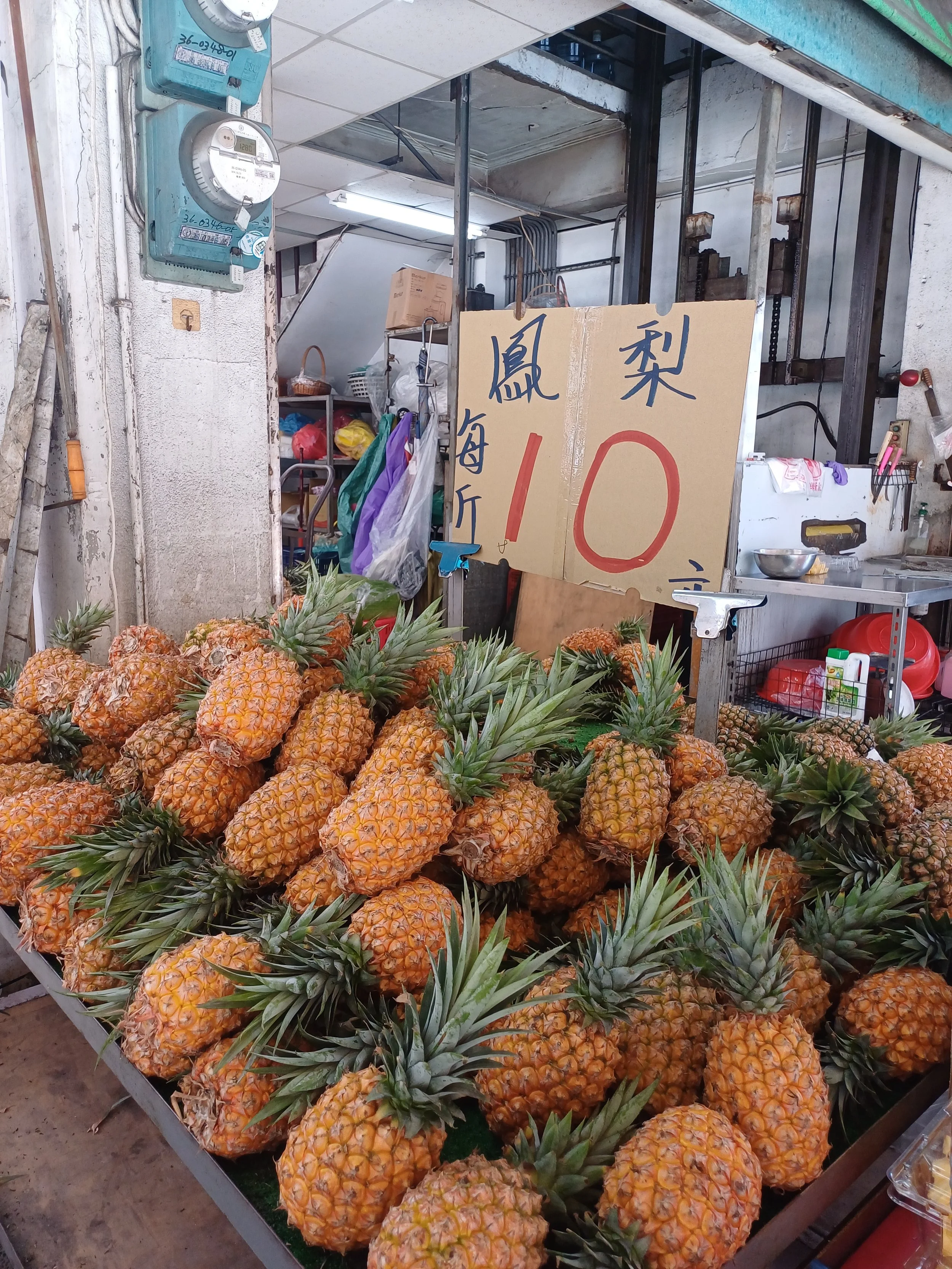
Taiwanese pineapples are cultivated to solve every complaint you’ve ever made about pineapples: sweeter, no stringy fibers. no tongue burning sensation, the skin is thin and the core is edible. They’re recognized as premium fruits in export markets like Japan and China, and apparently retailed for C$20 in Canada in 2022 if you were lucky enough to find one. I would honestly gladly pay a 1000% markup to eat it again.
Here’s an example of inferring a culture’s values. When I was categorizing transactions, I noticed a common trend of public bathhouses in Morocco, South Korea, Taiwan and Japan.
They all act as gender-separated traditional gathering places for socializing and washing your body. The Moroccan hammam and Korean jjimjilbang even both employ an older attendant you can pay to aggressively scrub and exfoliate every inch of your skin.
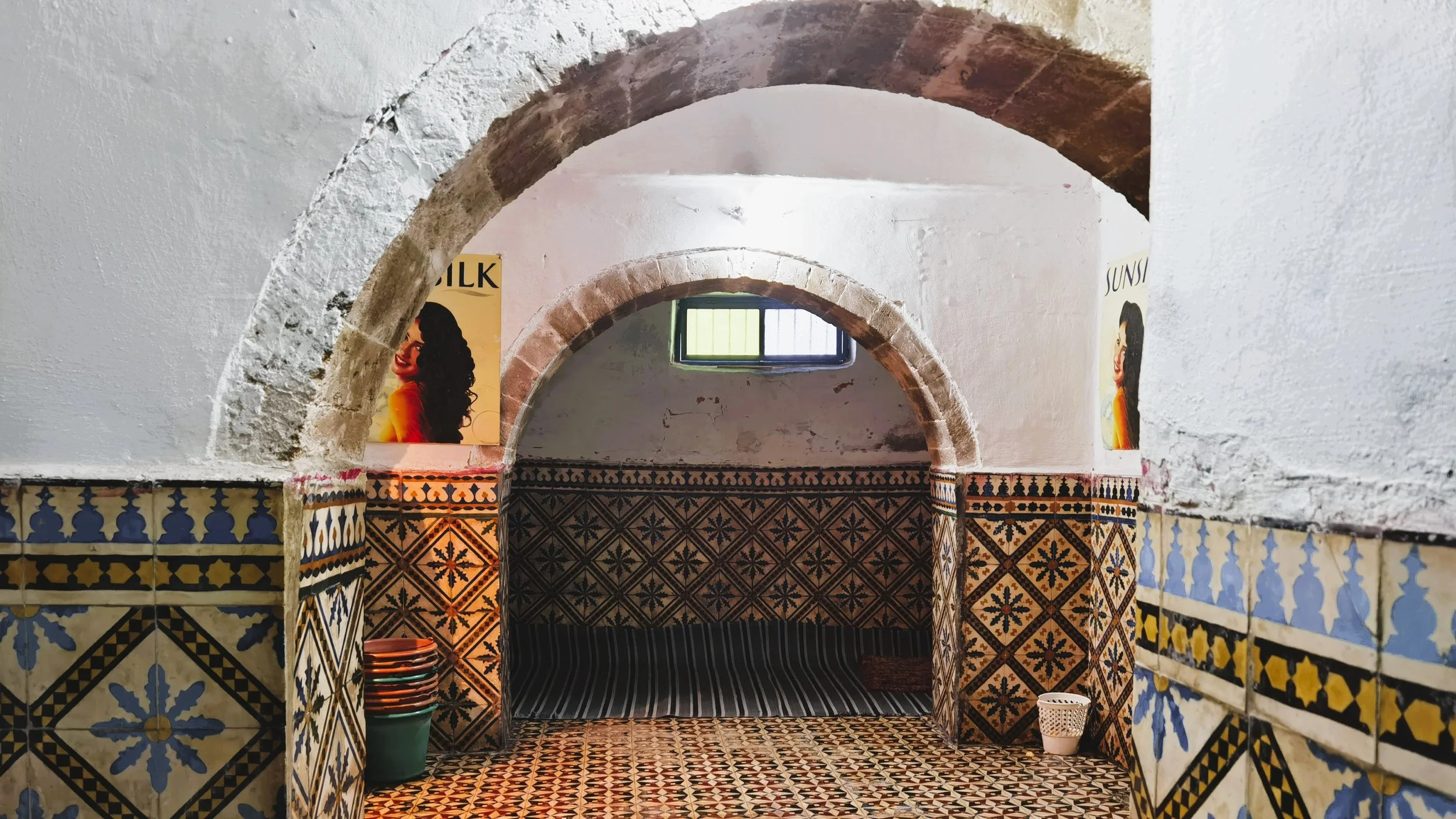
Traditional hammam in Essaouria, Morocco
Morocco seems so far away physically and culturally from these East Asian countries, yet their bathing customs are shockingly similar.
Arab societies have religious teachings that place a strong emphasis on personal hygiene. Japan naturally established thousands of onsens due to their abundance of geothermal waters, influencing communal bathing culture in Taiwan and South Korea during colonial times.
I thought it was fascinating that they each developed similar institutions from completely different histories.
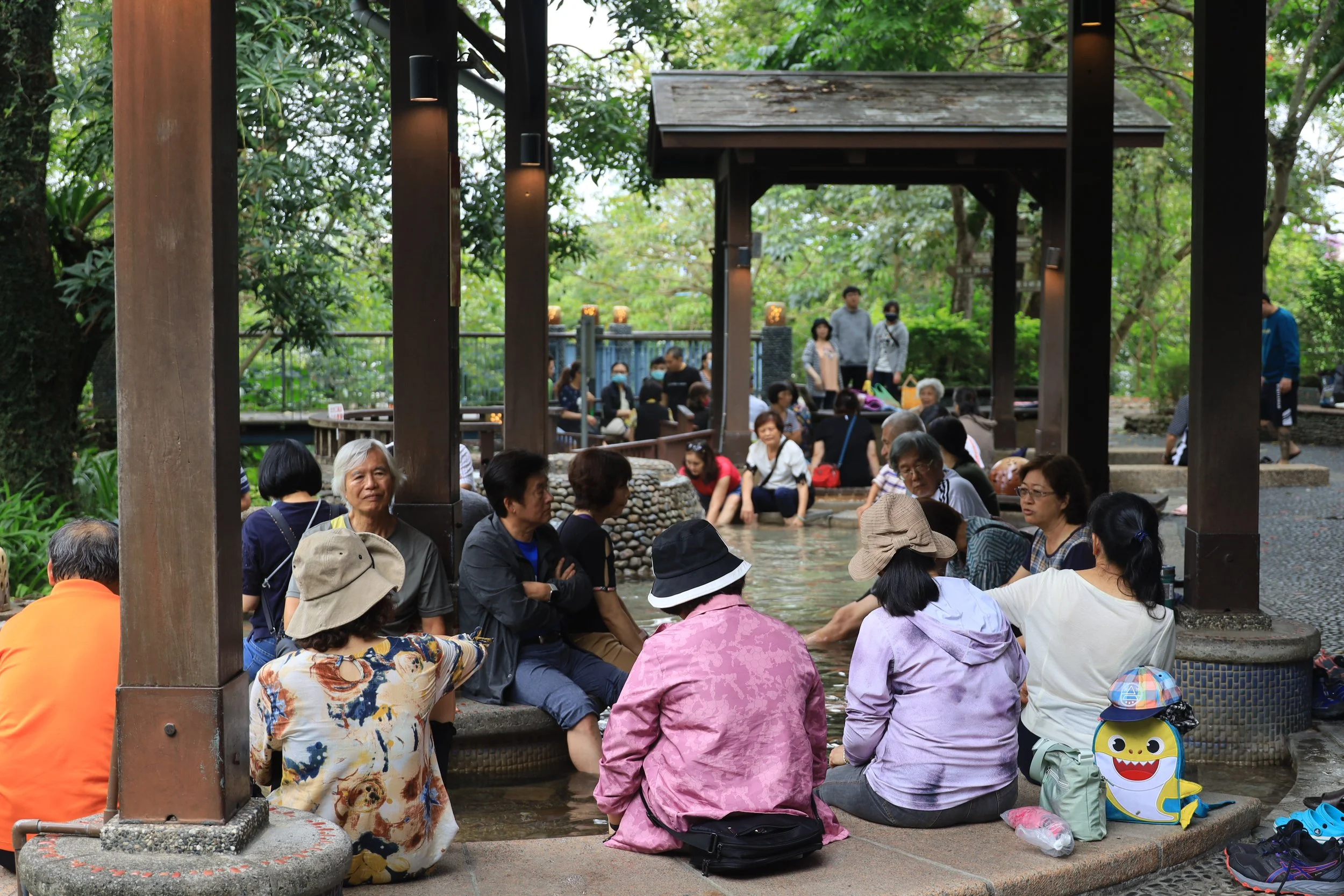
Chatting with strangers at a foot bath in a public park in Jiaoxi, Taiwan
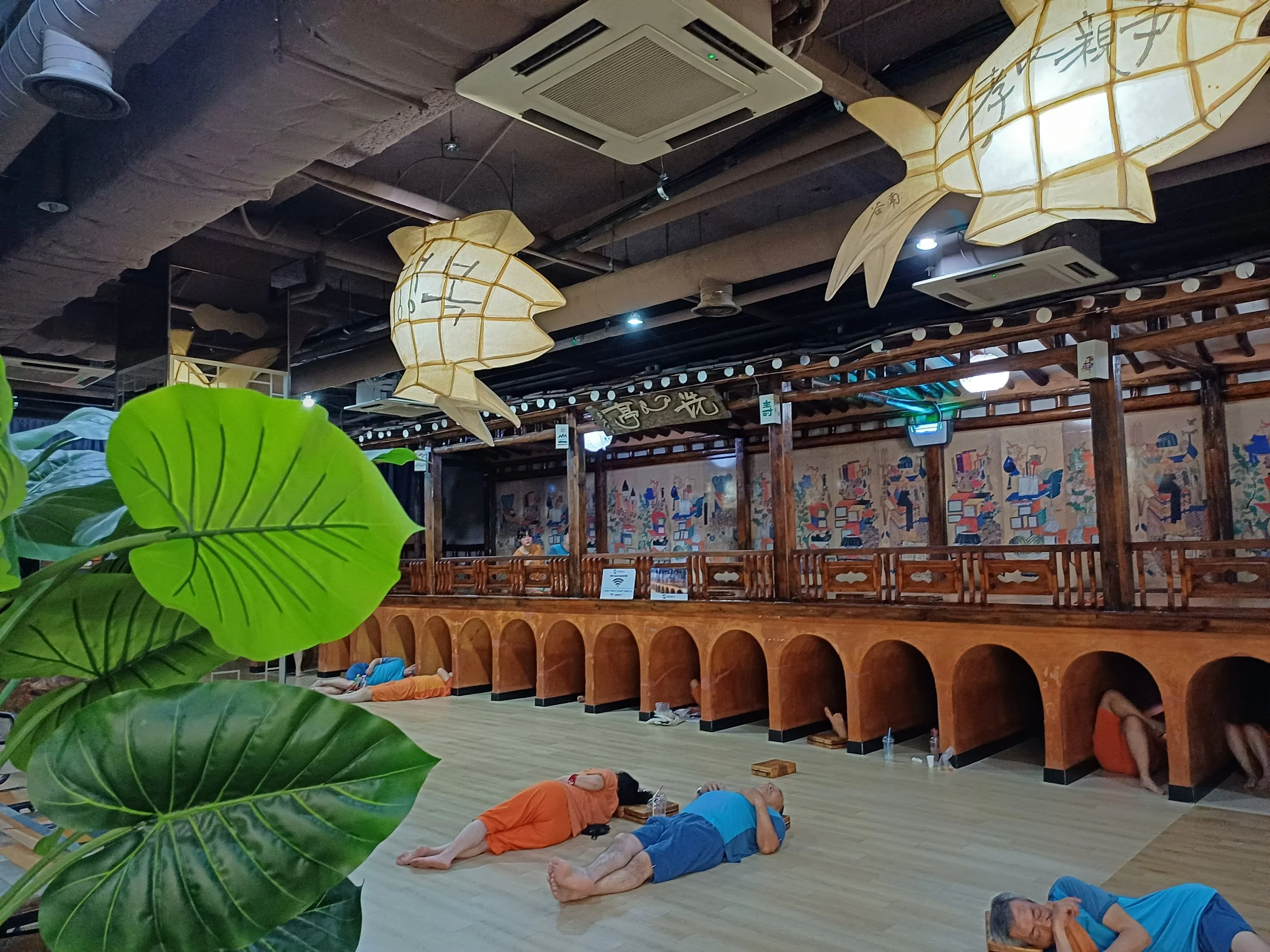
Co-ed rest area in a popular 24-hour jjimjilbang in Seoul
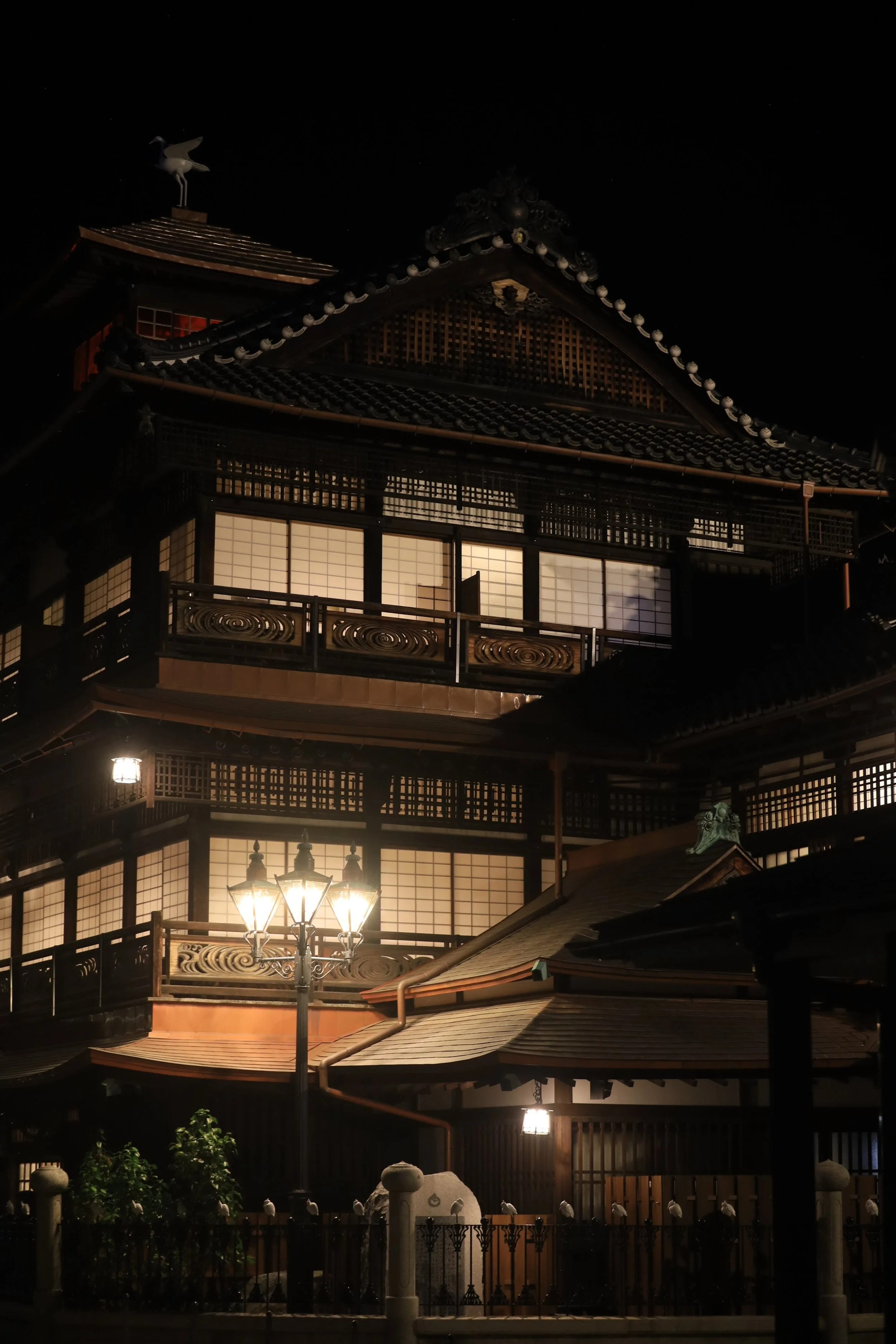
Dogo Onsen, the oldest hot spring in Japan and inspiration for the bathhouse in Spirited Away
As for how tracking expenses can share insights on how countries are designed, let’s look at trains. I love train travel.
The island countries of Sri Lanka, Taiwan and Japan each have an extensive train network that act as critical infrastructure for moving people over long distances. I spent between 4 to 6 weeks traveling in each country and relied on the train as my primary mode of transportation.
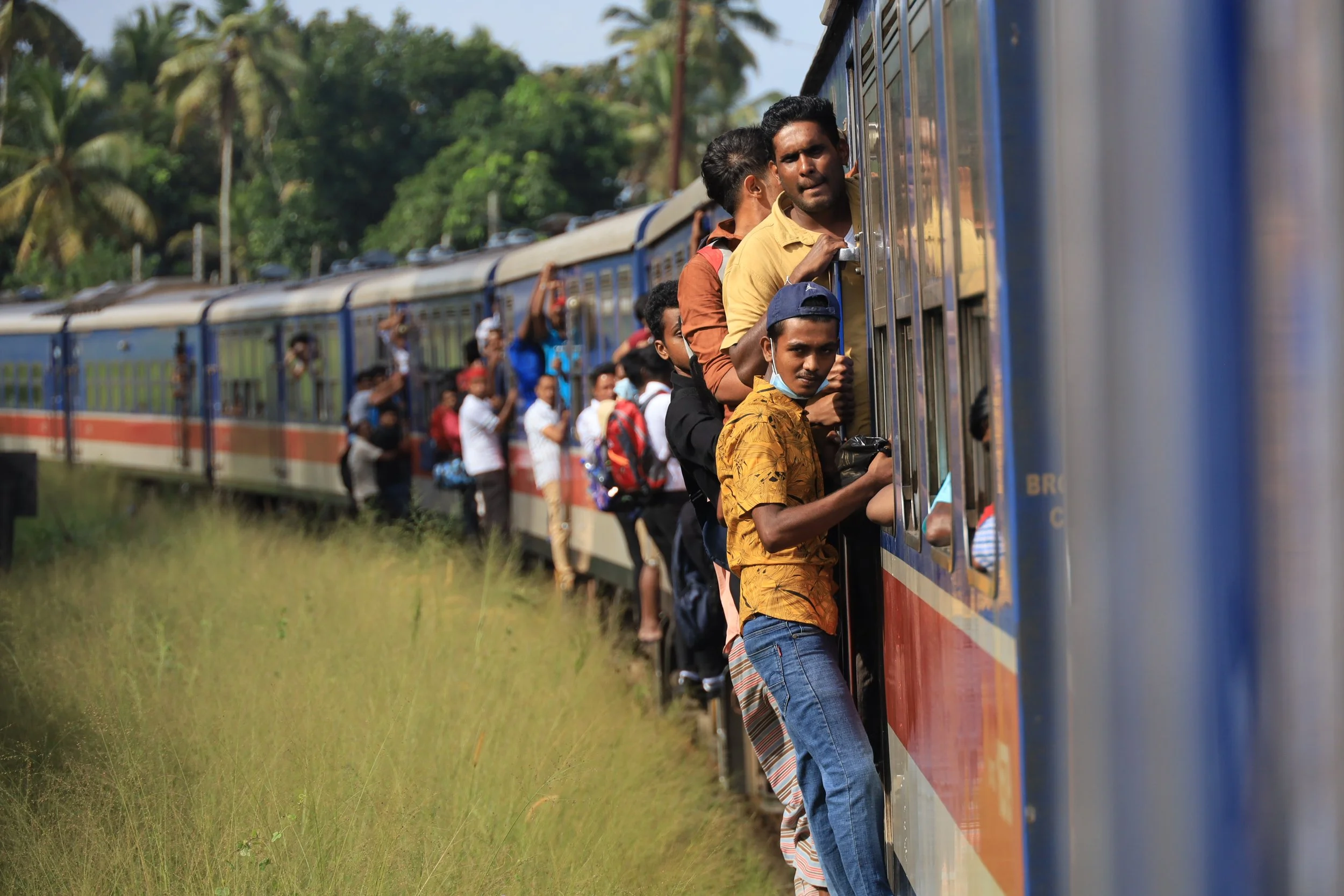
Trains in Sri Lanka never sell out of tickets, but there’s no guarantee of getting on. This Friday evening train from Colombo to Kandy is literally bursting with workers returning home for the weekend from the capital city.
In Sri Lanka I rode the famous Ella Odyssey train just for tourists, but also squeezed in on jam-packed local trains from Jaffna at the northern tip all the way to the southern terminus of Beliatta near bustling beach towns and surf hotspots.
All their lines are spurs so I had to double back each segment, yet train travel only added up to 3% of my total spending in Sri Lanka— that’s $18 well spent!
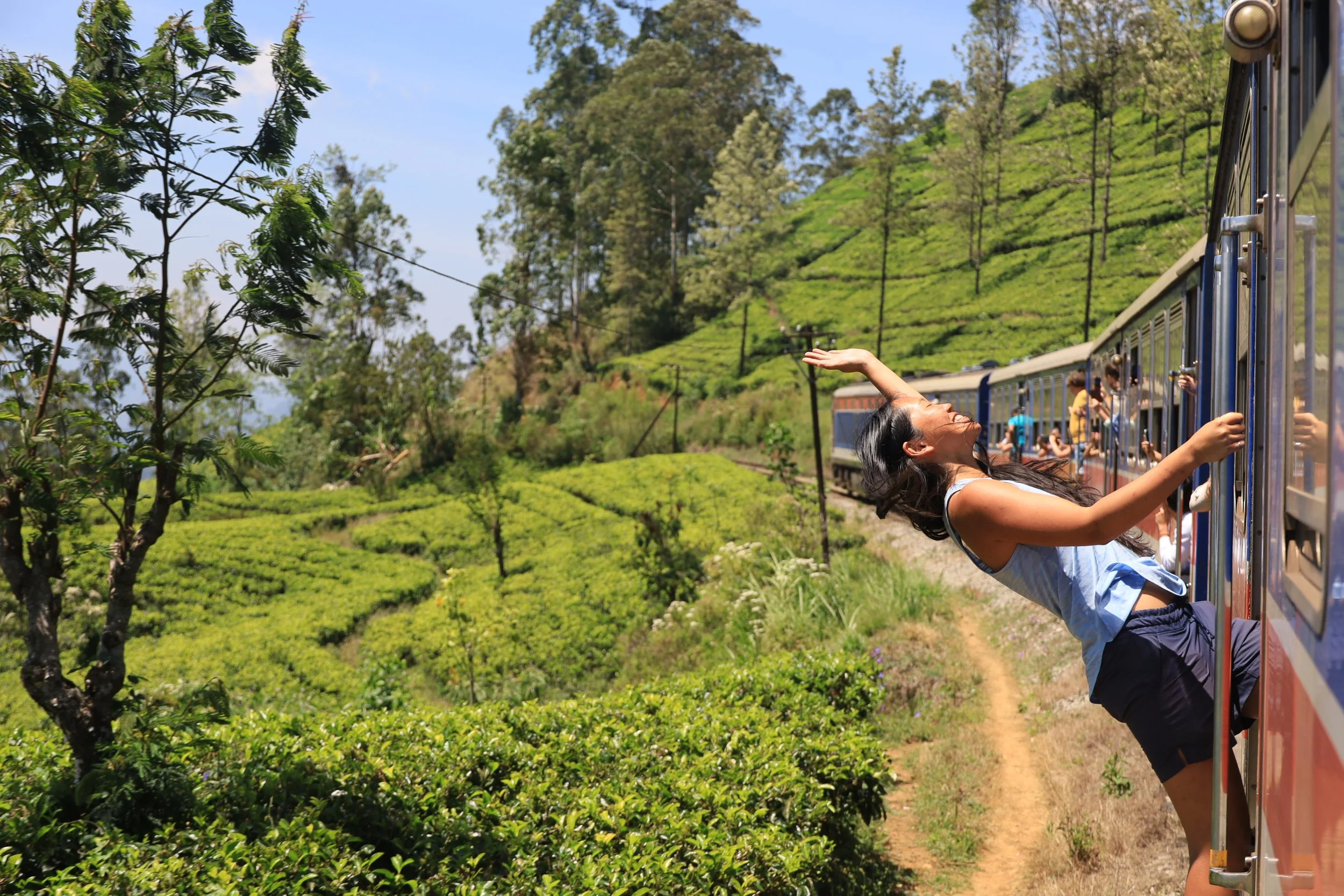
After 2 weeks hiking through tea plantations in Sri Lanka’s central highlands, I memorized the best photo spots to be ready to pose on my return train trip
Taiwan’s railway was largely built under Japanese occupation and shares in the brilliant design, execution and customer experience that Japanese railways are famous for. Local trains of various speeds draw a loop of the main island in synchronized lockstep, from Taipei to Kaohsiung, gliding through the industrial and agricultural heartland of the west, then tunneling between lush misty mountains and steep gorges on the east coast.
After completing a full circle around Taiwan, train costs amounted to just 4% of my spending at $51.

2 months after the deadly 7.4 magnitude Hualien earthquake, aftershocks regularly struck the east coast and most Taiwanese warned me not to go
Japan was the only country out of these three where I heard locals complain about how expensive the train is, and not just the bullet train. Of course everything is more expensive in Japan, but the cost of train travel for me increased disproportionately to $170 or 14% of total costs.
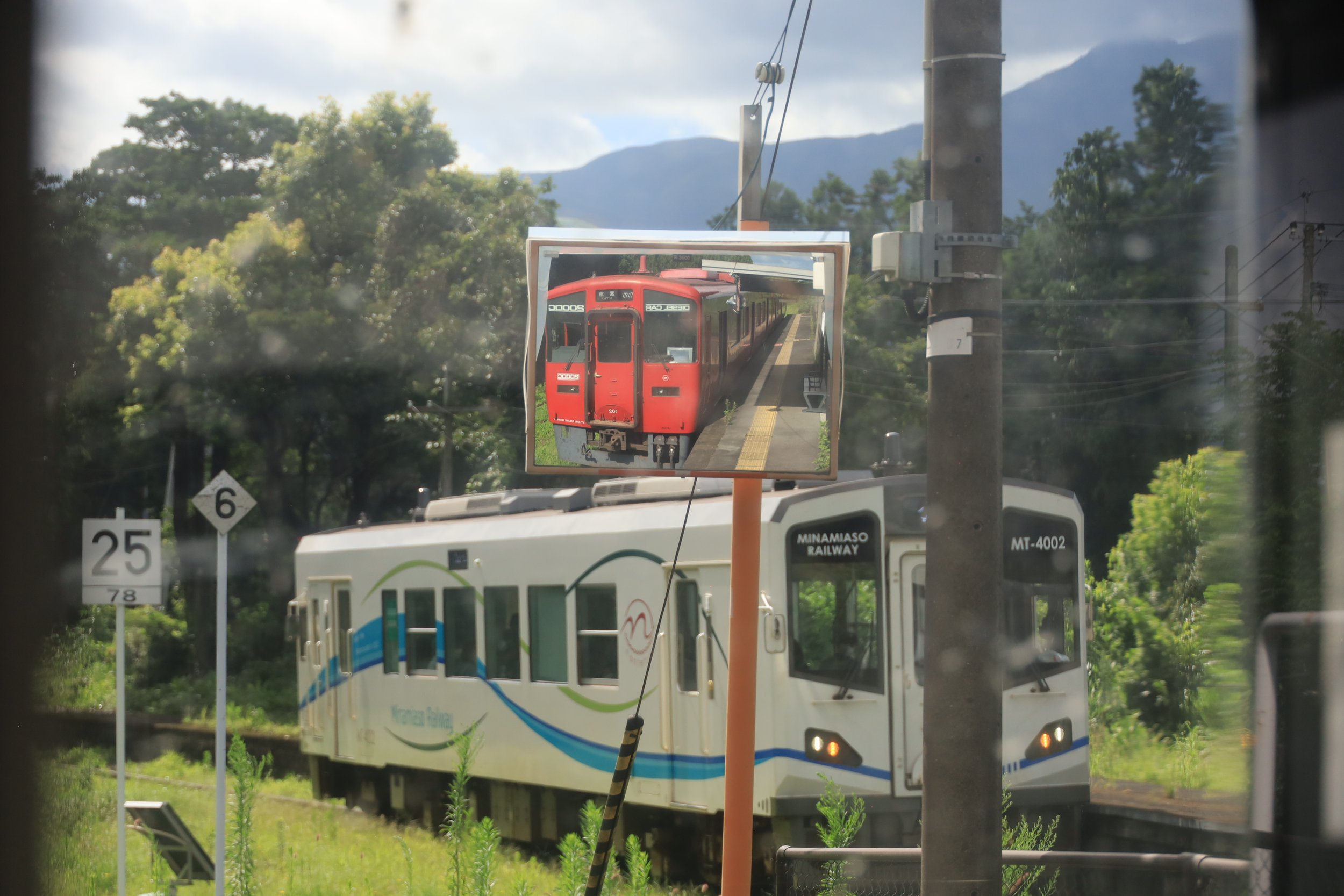
Cute small trains and big volcano energy at Mount Aso🌋

The Yellow One Man Diesel Car is the antithesis to the Shinkansen 🚃
My winding path between Fukuoka and Nagoya spanned a distance and pace similar to my journey in Sri Lanka and Taiwan, yet the evidence to support the musings of my Japanese friends only solidified at the end when I summarized my spreadsheets.
This analysis got me curious as to why Japanese trains are more expensive, and a quick search revealed one possible answer. In most countries, passenger trains are part of a national corporation overseen by the government, which often leads to massively subsidized tickets and operating at a loss year after year. This is the case with Sri Lanka and Taiwan— which raised the price of fares for the first time in 30 years in 2025. But the Japanese rail network is a collection of for-profit businesses. I rode mostly JR lines but also Keihan, Nishitetsu and others, yet this idea of competing rail companies didn’t click at the time because the IC card used to tap on treated all operators the same.
In reality, their business model is very complex and revenue doesn’t rely entirely on ticket sales. Some have compared Japanese railways to real estate companies because they buy up land and buildings around a station and make it more valuable by providing a train service.

A lot of people believe traveling is very expensive and cannot fathom how my numbers are real. I wasn’t only staying in cheap countries either, with 67% of my time spent in what the United Nations categorizes as “developed countries” as of 2025.
Splitting the costs by region to better understand which countries were more expensive to visit reveals even more surprising insights.
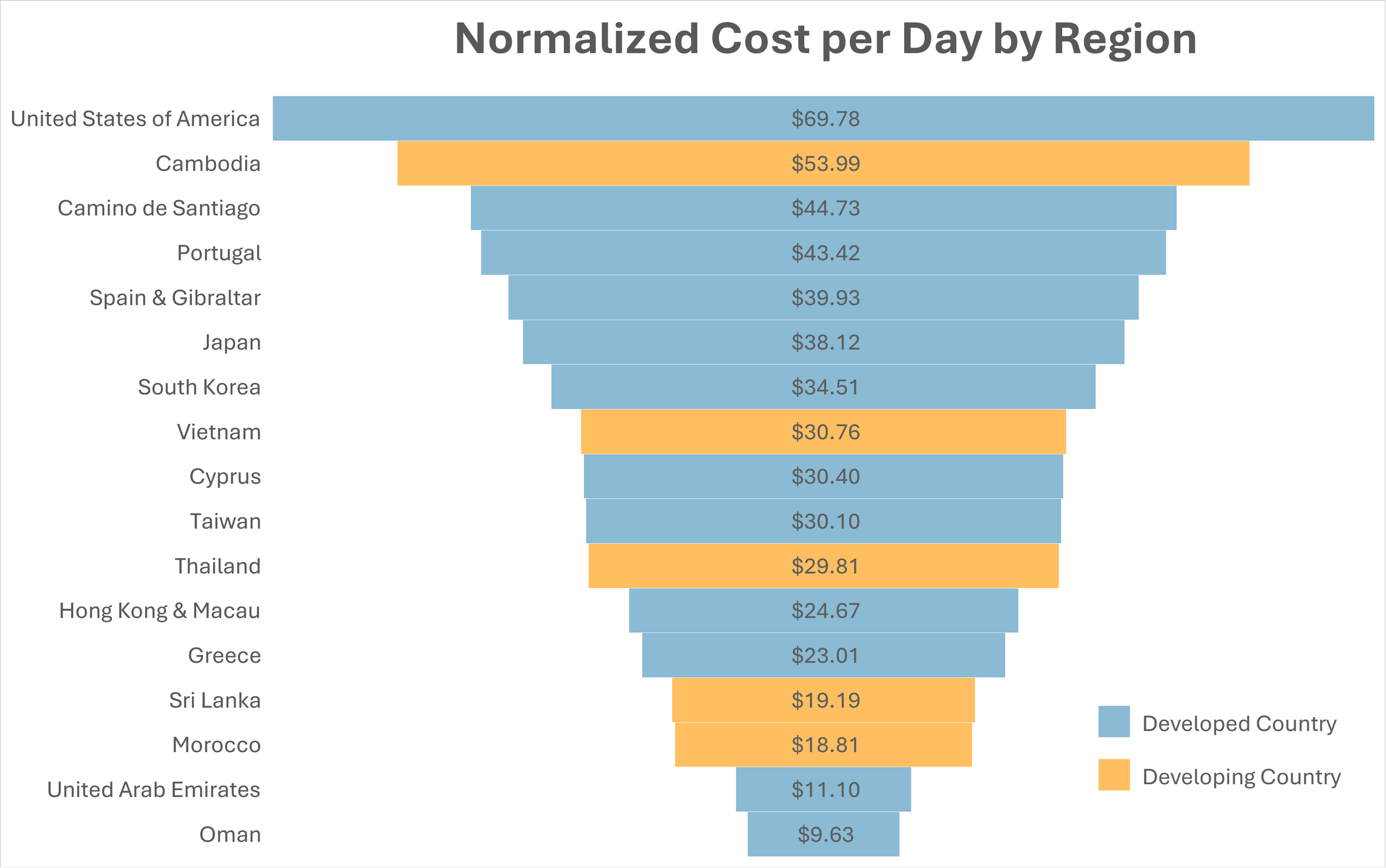
To more accurately reflect average daily spending, costs were normalized by removing the initial method of entering each region (typically flights) and the “extreme sports” category comprised of large one-time expenses.
Not surprising anyone is the USA topping the charts by a significant margin at 30% more expensive per day than the second-most expensive country of… Cambodia?
That doesn’t seem right. Cambodia is a Southeast Asian country widely known for being cheap and ranked lowest on the UN’s Human Development Index out of all the countries I visited this trip.
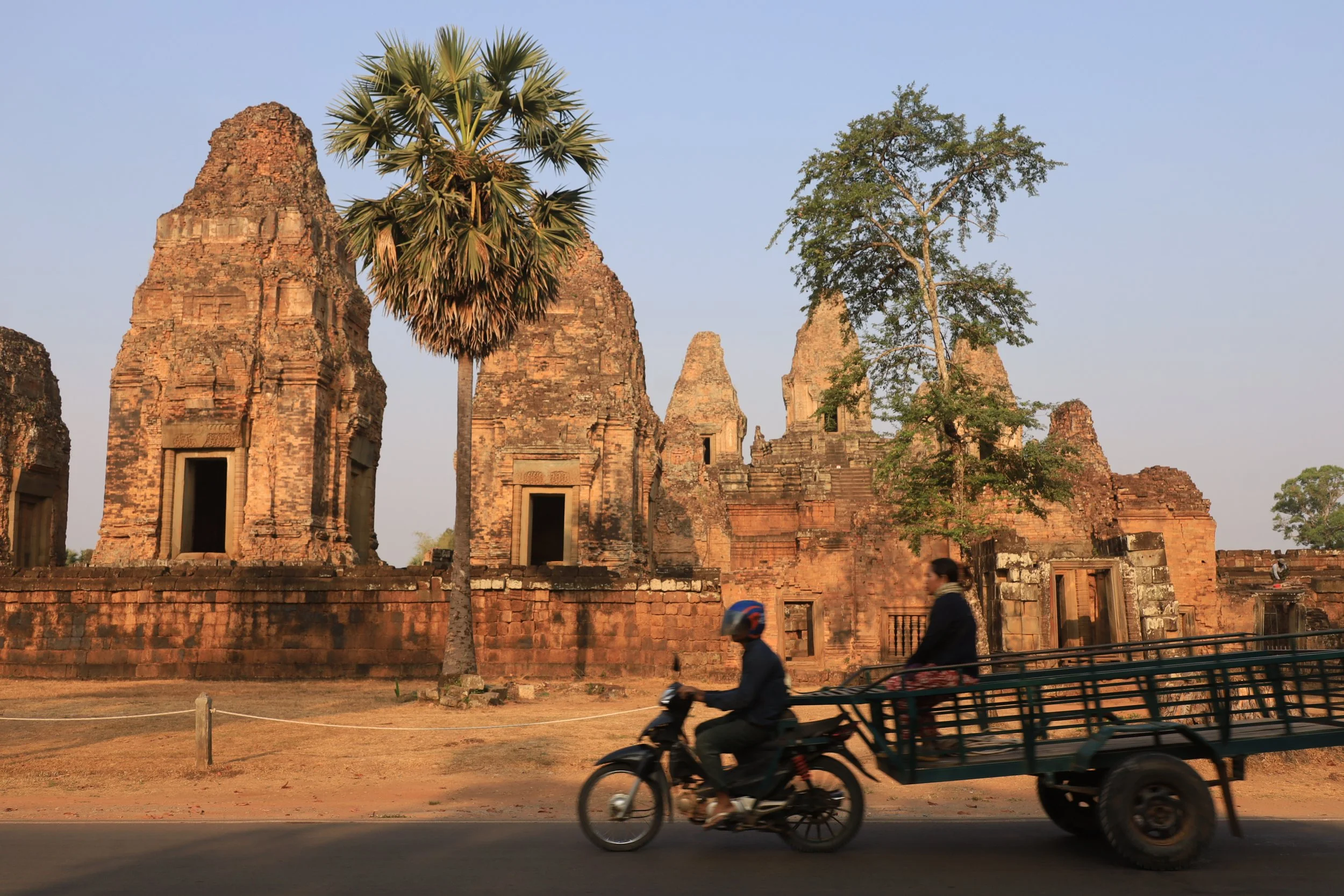
I only spent 6 days in Cambodia but had to pay $40 just for the privilege to enter. Technically a 30-day tourist visa is $30, but mandatory bribes are the norm to ensure smooth entry at land borders.
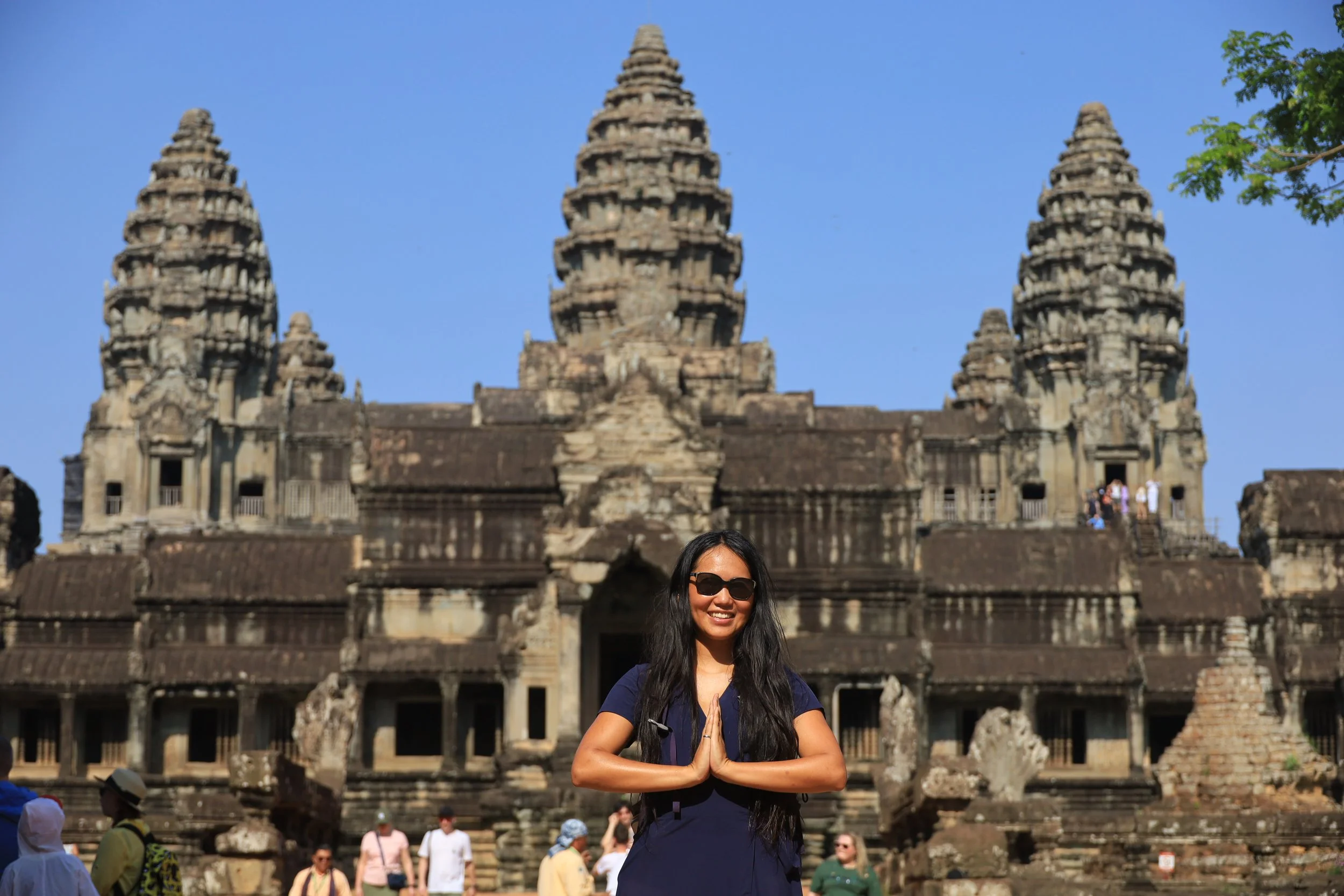
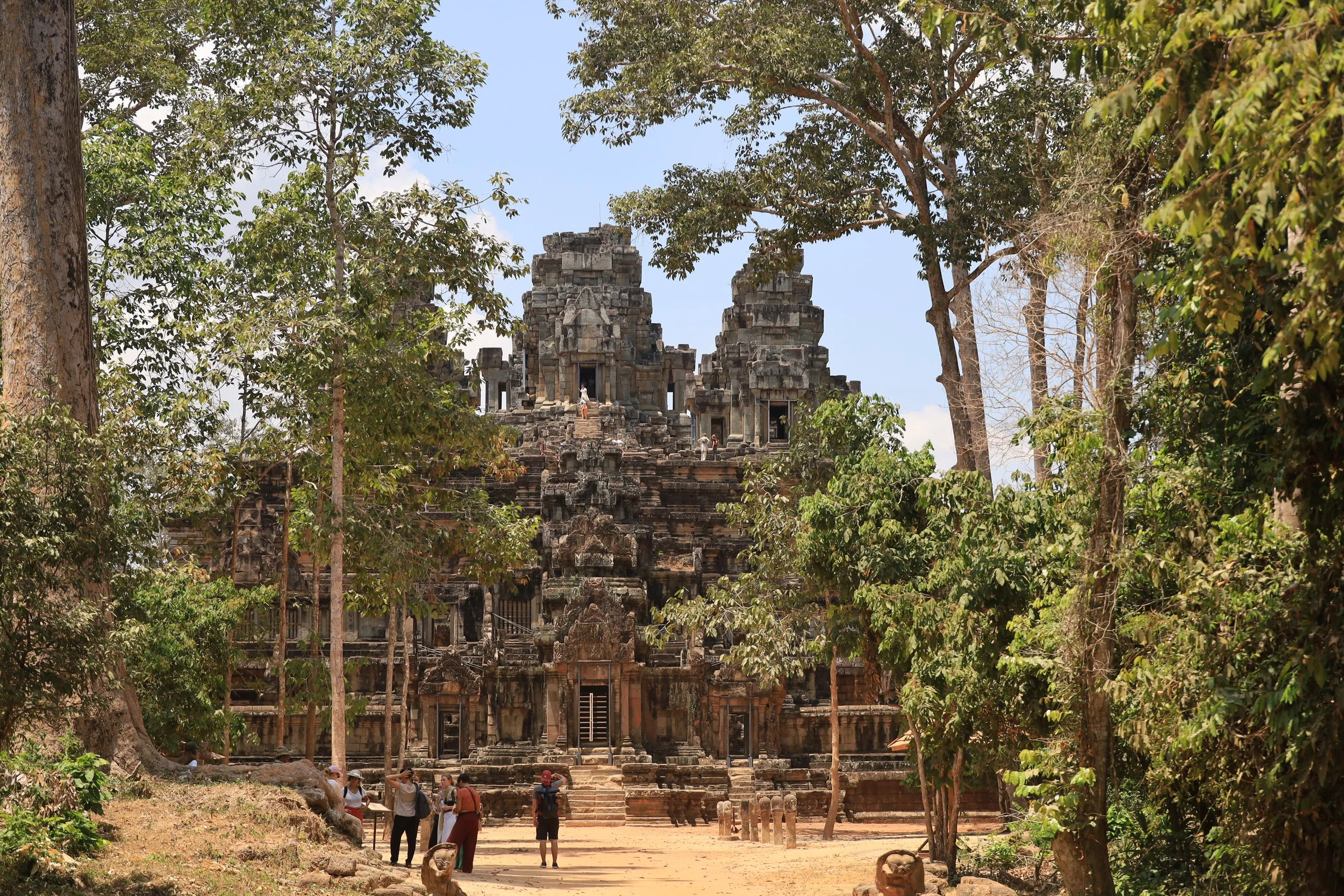
Nearly all first-time visitors in Cambodia are going to see Angkor Wat, the ancient Hindu-Buddhist temple complex that is so iconic that its depicted in the center of the Cambodian national flag. The temple grounds are vast and sprawled out in the jungle so you absolutely need to rent a motorbike or hire a taxi over multiple days.

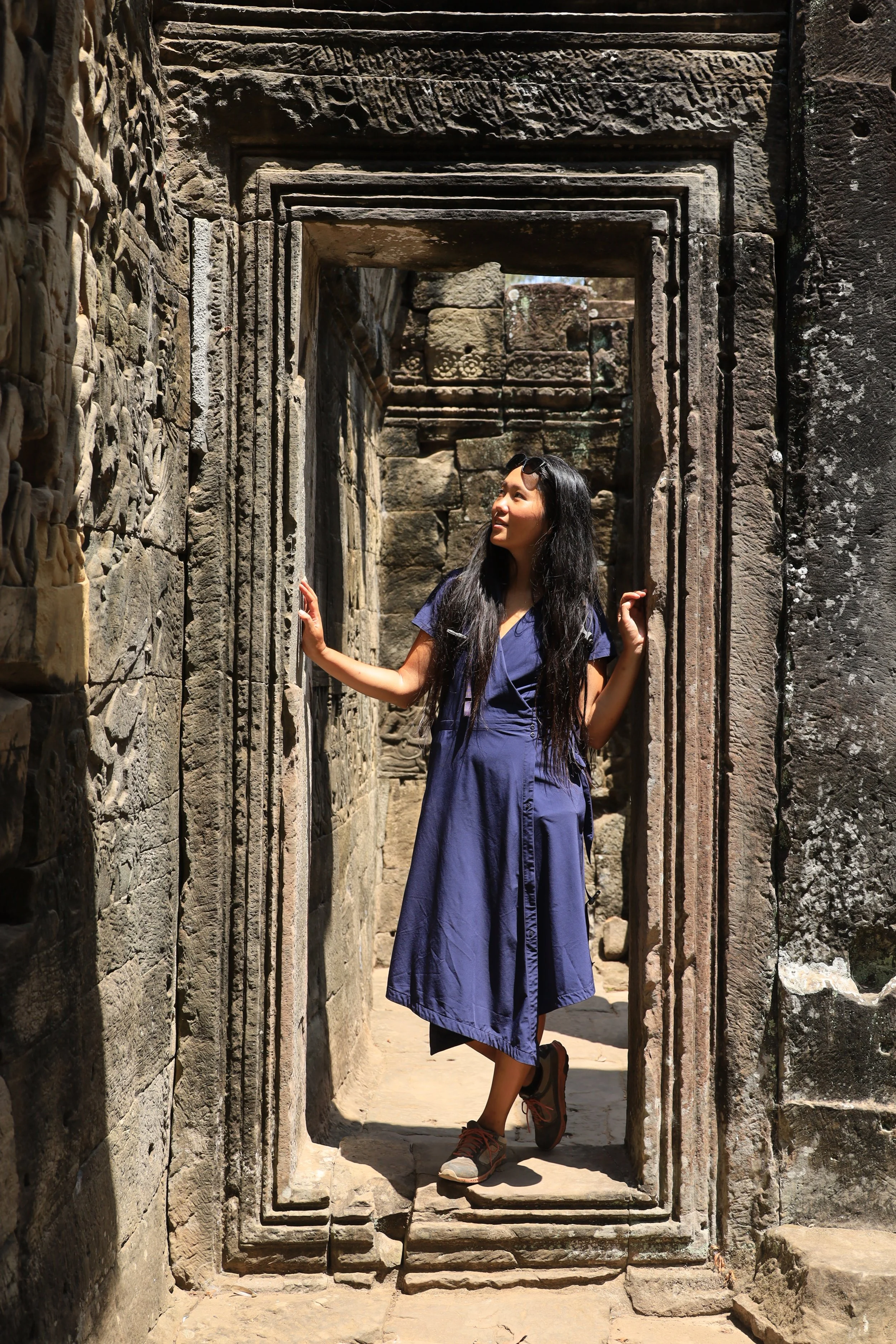
We opted for the 3-day admission ticket paying $62 and picked up a motorbike rental for $13. If we didn’t spend a few more days in Phnom Penh to learn about horrific legacy of the Khmer Rouge, our average cost per day would have been even higher.
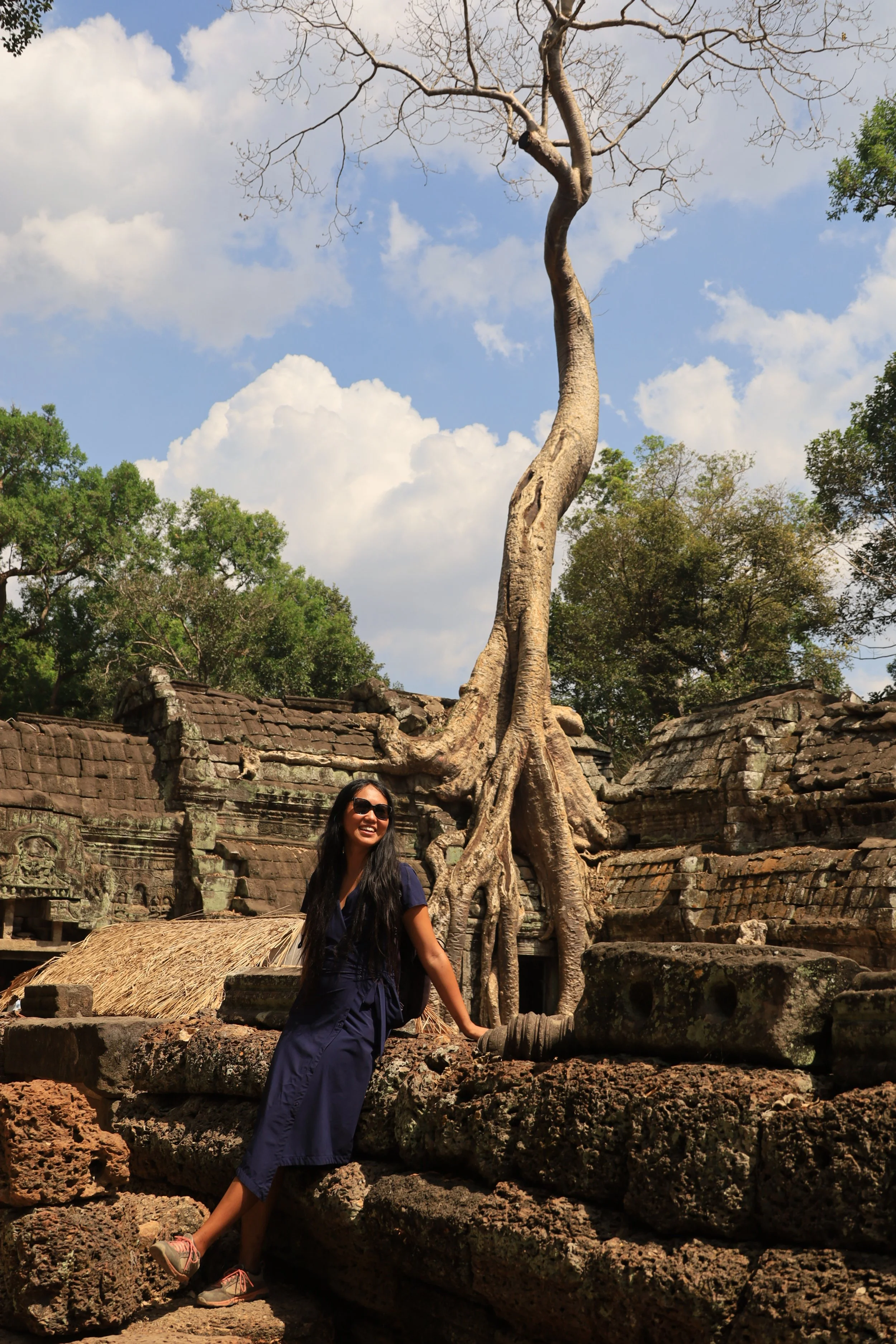

Cambodia is perfectly positioned between Thailand and Vietnam, two of the most visited countries in the world, and it’s clearly trying to use tourism to lift its economy just like its neighbors. Angkor Wat attracts millions of visitors annually, yet there isn’t much else the country is known for tourism-wise to squeeze any more value out of a 30-day visa.
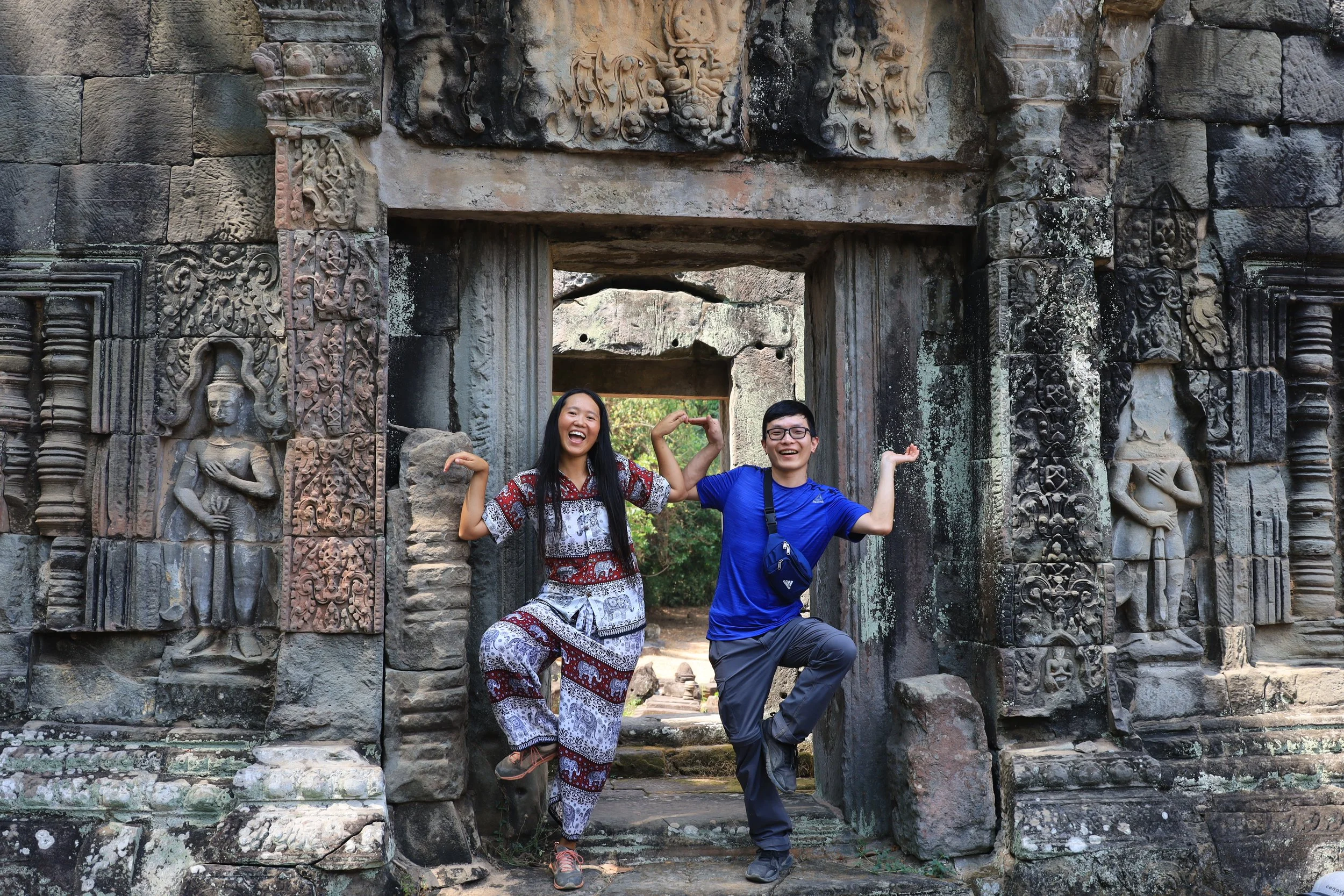
Jimmy and I reunited for 3 weeks in Southeast Asia about 8 months into my trip
Another surprise on the Normalized Cost per Day chart are the Middle Eastern countries of the United Arab Emirates and Oman at the bottom averaging just $10/day.
How can these wealthy, highly developed countries be the cheapest for traveling? Isn’t Dubai world-famous for its glitzy luxury lifestyle and ultra modern architecture?
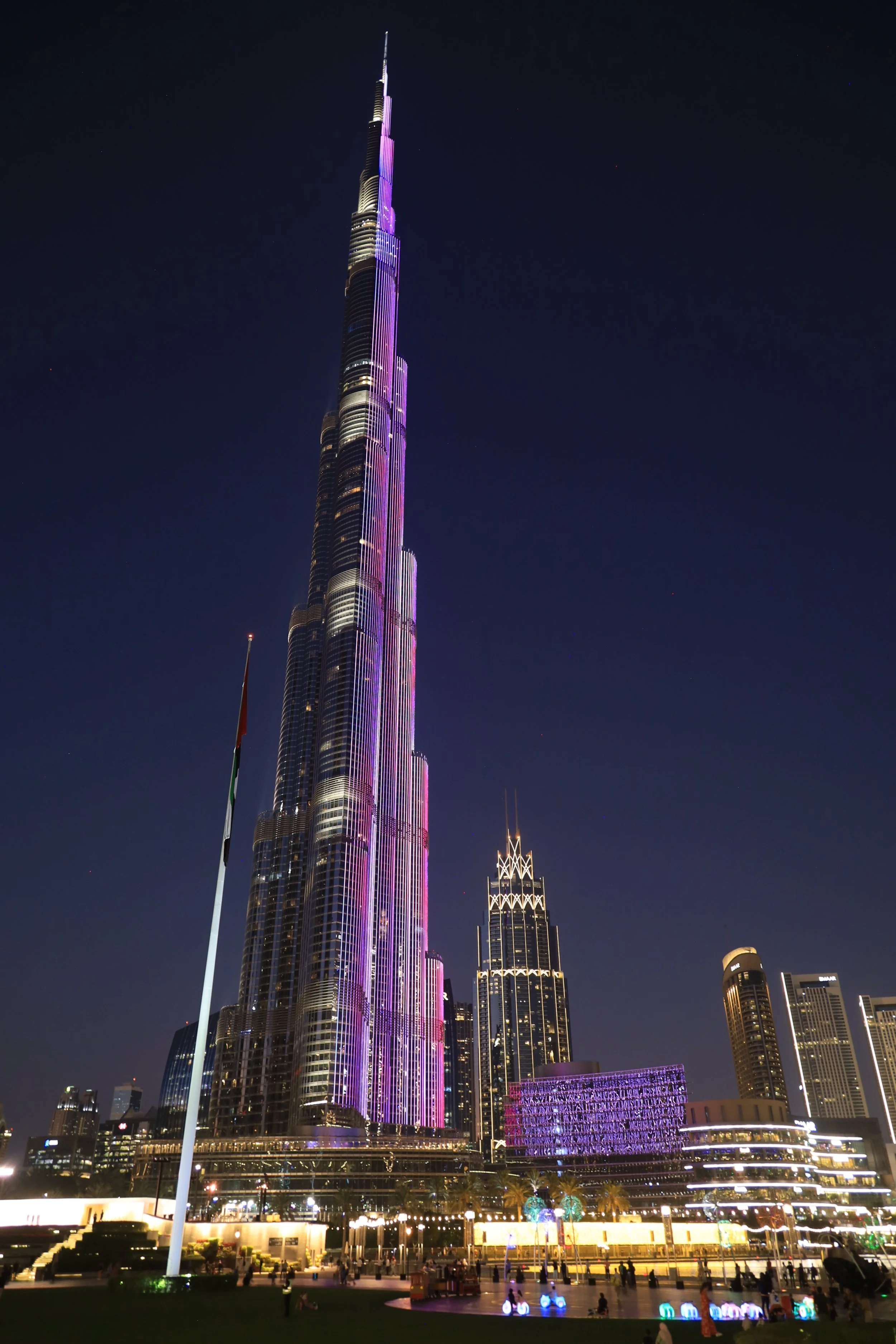
Burj Khalifa, tallest building in the world
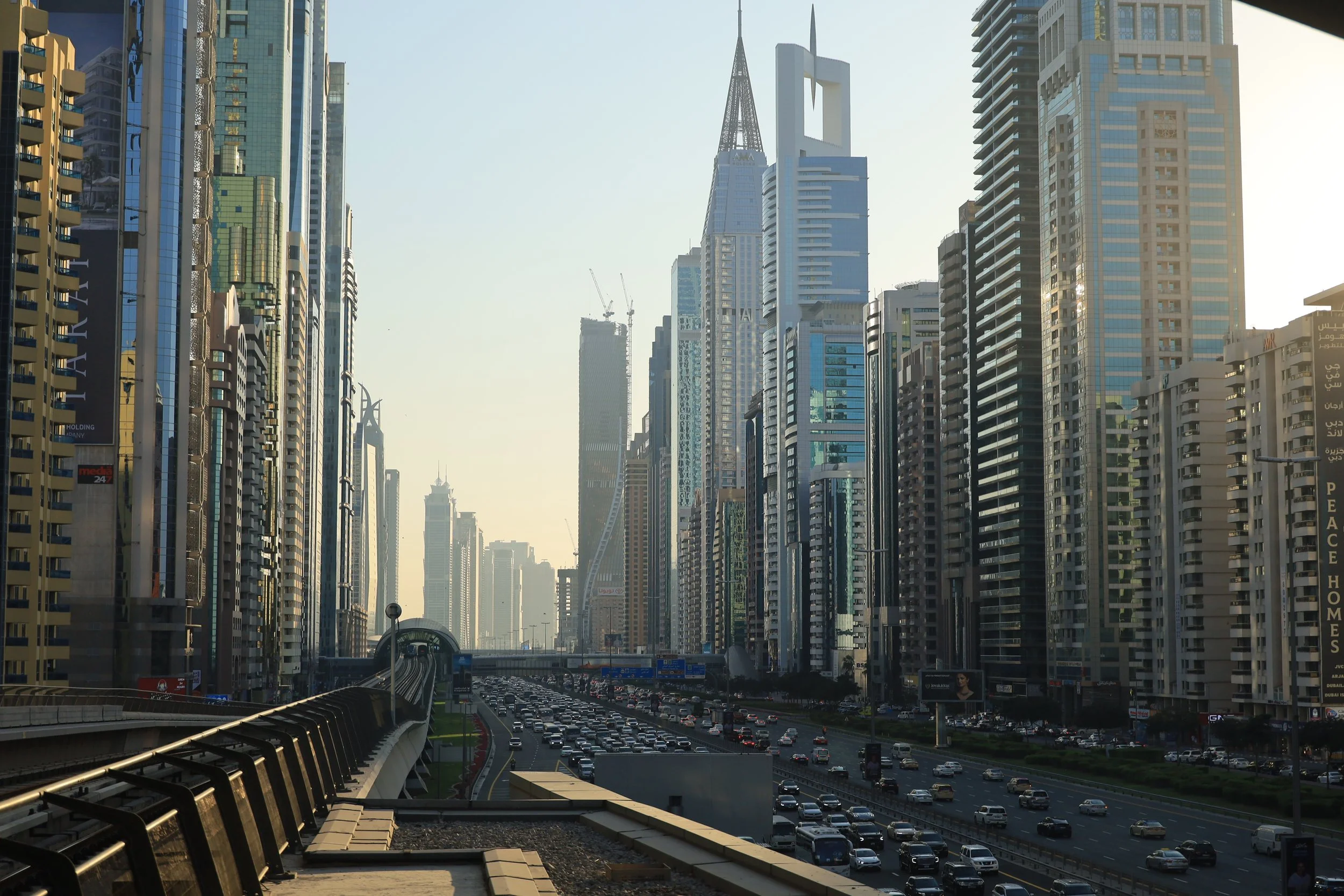
Dubai’s financial district as viewed from the driverless metro
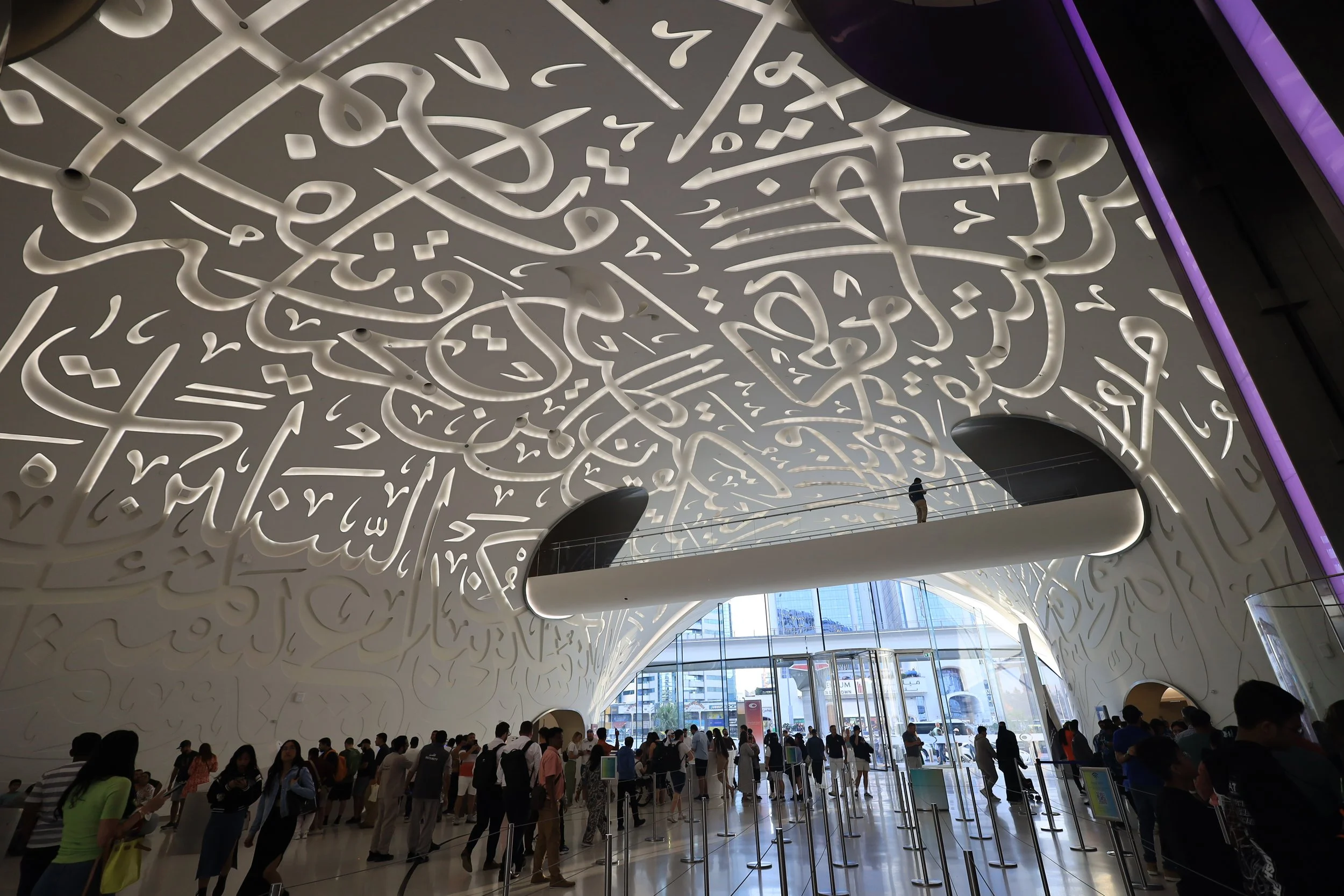
Inside lobby of the Museum of the Future
Both countries are insanely rich from oil and their citizens benefit from high wages, state benefits and no income taxes. But this wealth doesn’t trickle down to foreign workers which make up 88.5% of the population in the UAE and 45% in Oman.
Salaries are determined by which passport you hold, so workers (especially for manual labor jobs) are often sourced from low-wage South Asian countries nearby with offers that pay a little more than back home— just enough for them to willingly accept the job. And these workers need to eat too.
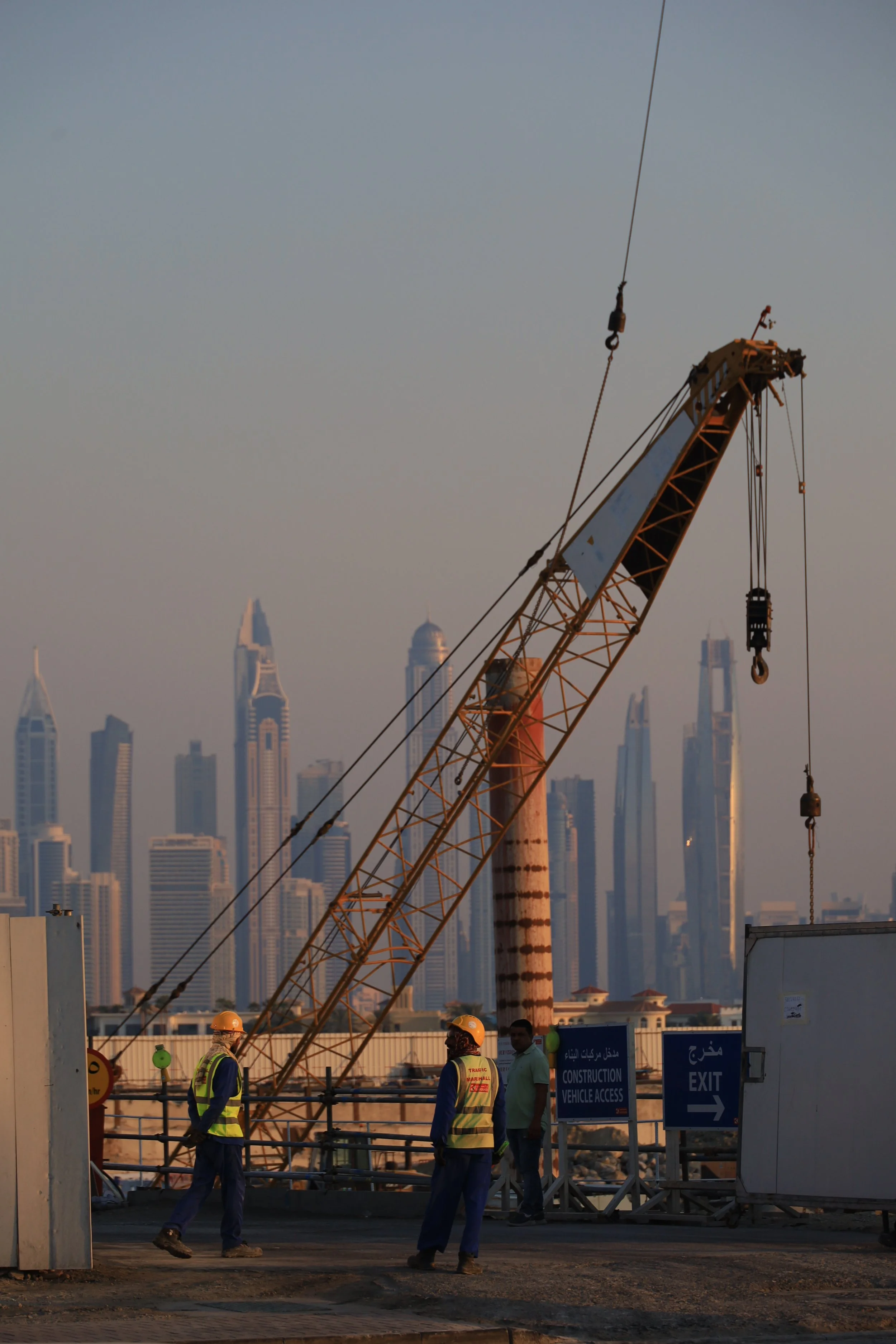
Numerous construction projects on Palm Jumeirah, a man-made group of islands shaped like a huge palm tree from the sky
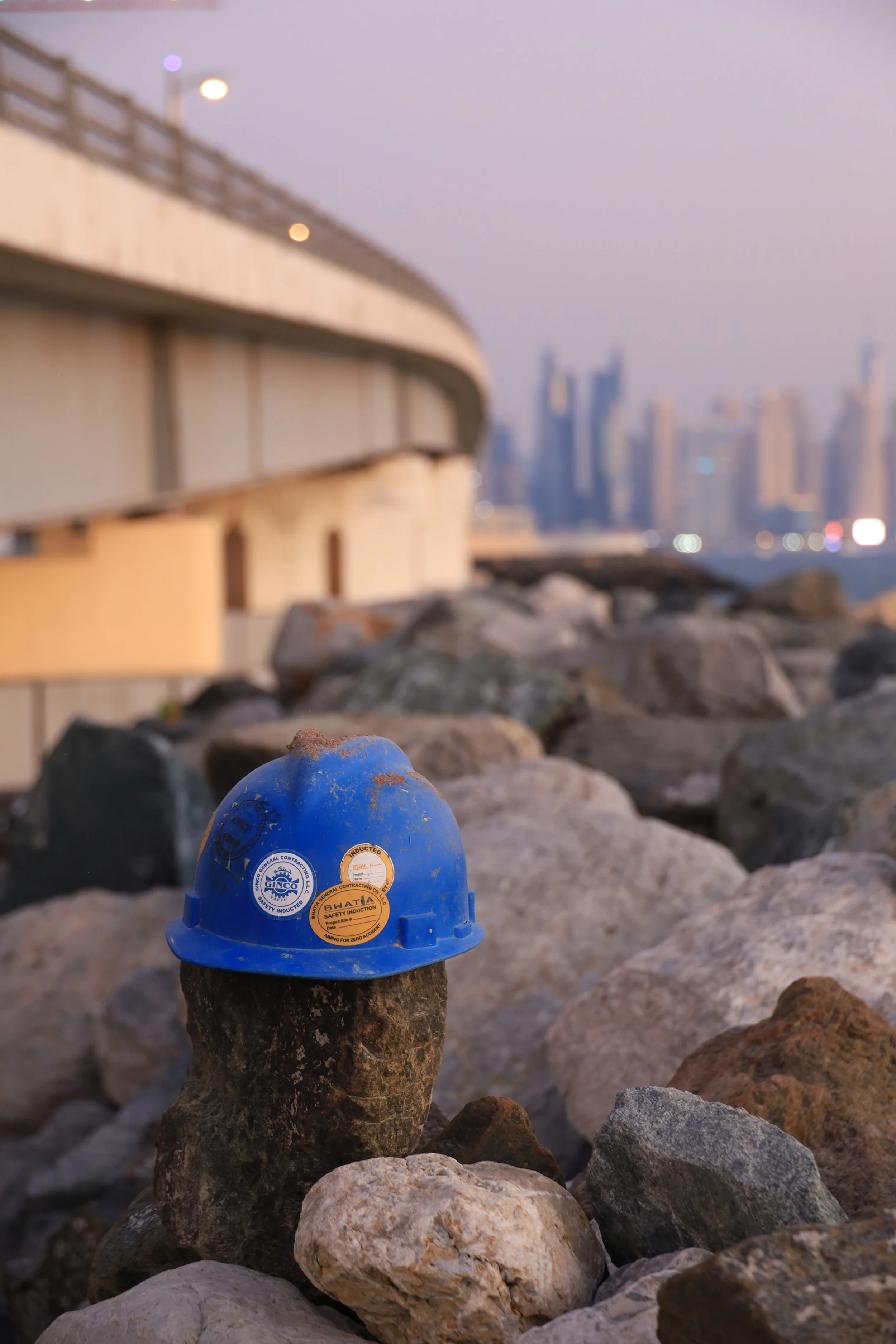
A lost construction worker’s hard hat with Dubai Marina in the distance
As a result you can easily find products and services catering to both ends of the price spectrum.
I can be at a 5 star hotel in Dubai Marina drinking $20 cocktails at their private beach club, then hop on the metro to Deira, a district in Old Dubai, for some delicious 25 cent karak chai and $1 shawarma.
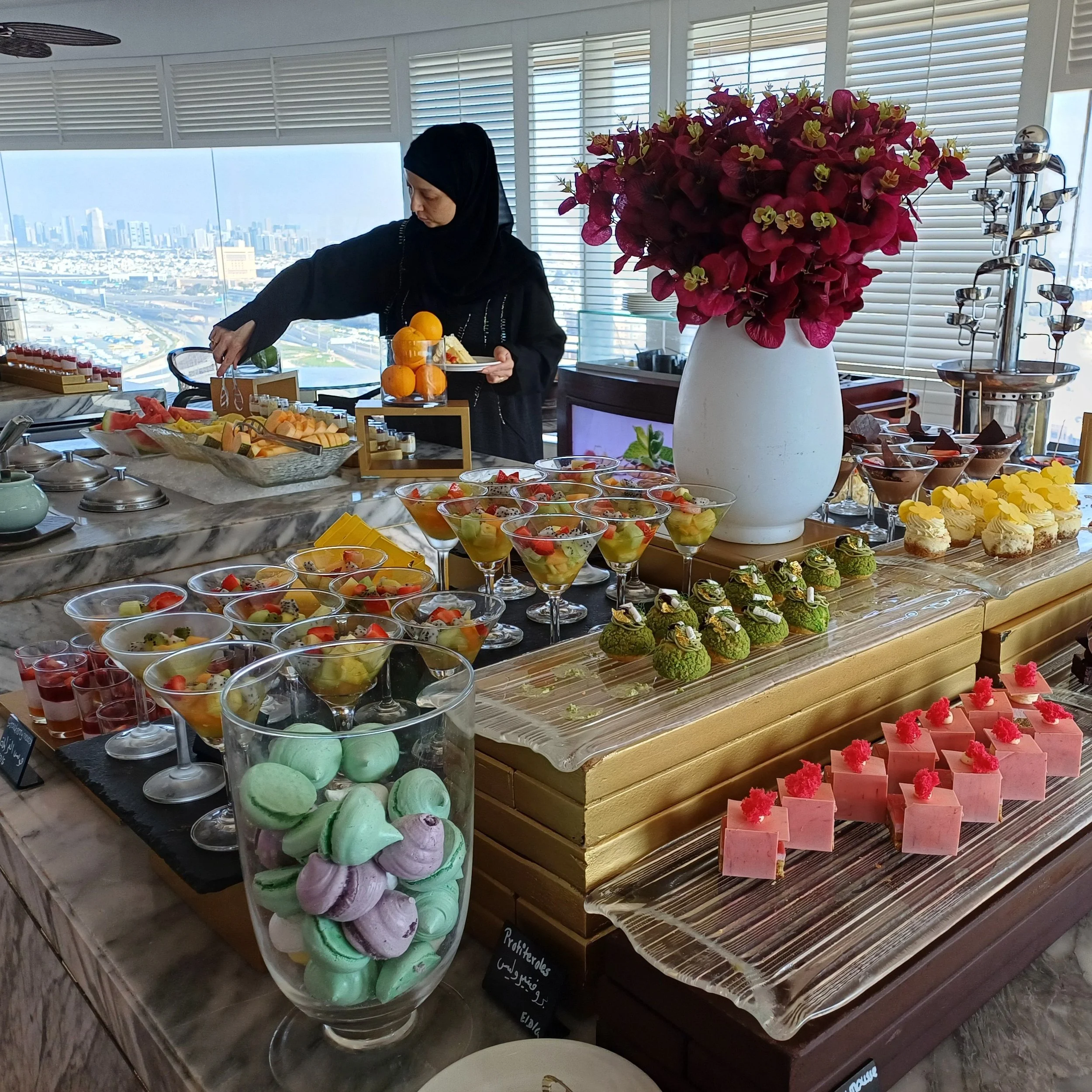
Dessert spread at a brunch buffet in Dubai’s only 360° revolving restaurant, starting at $70 per person
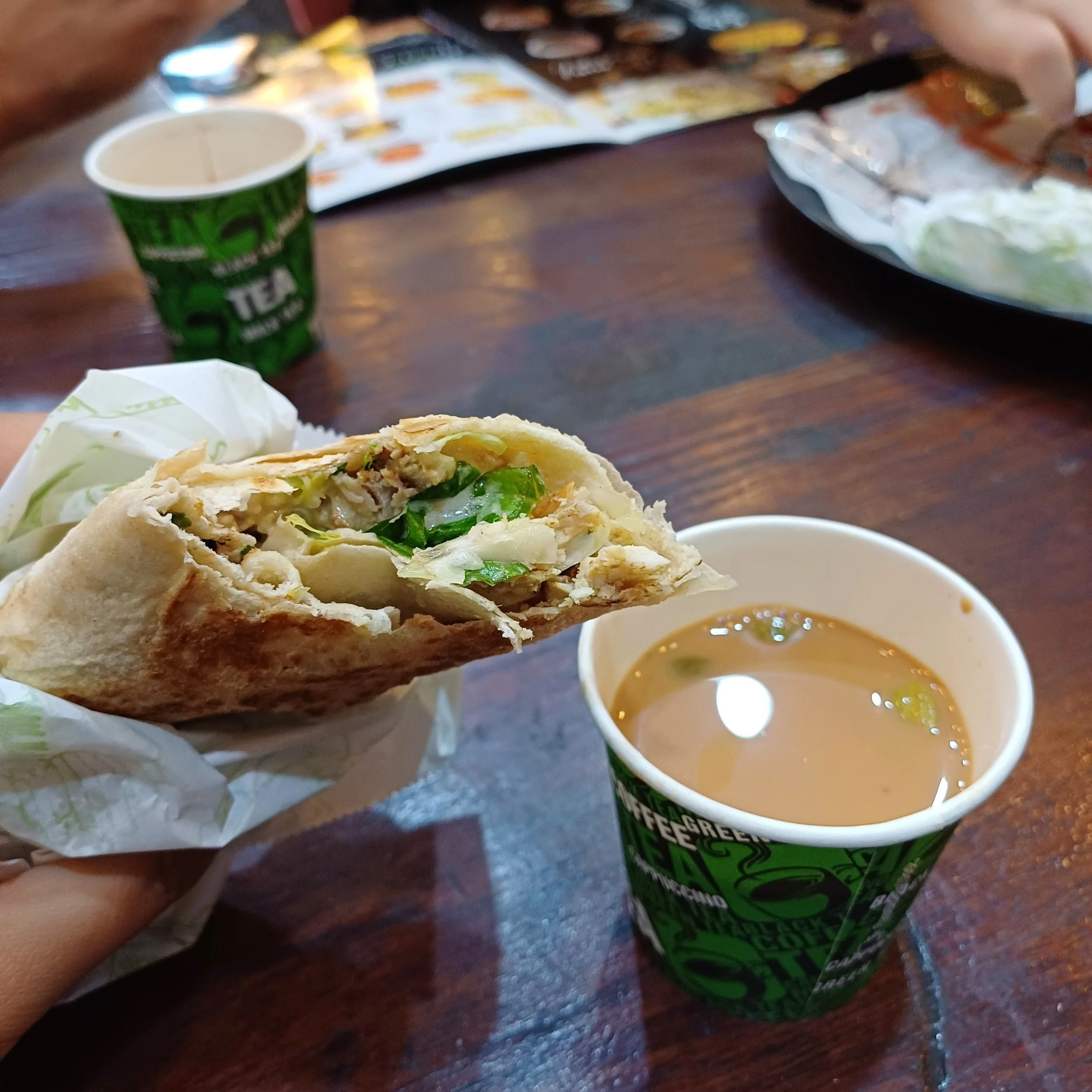
Late night shawarma and chai-hopping with South Asian expats who introduced me to their favorite hidden food gems
But that doesn’t completely explain how I got my spending down to a mere $10/day in the UAE and Oman, or an overall average of $39/day.
To understand how I stretched my travel funds so far, you’ll need knowledge and mastery over these 5 principles:
Couchsurfing
Slow Travel
Getting Off The Beaten Track
Knowing When To Plan Ahead
Setting Up Your Home Base For Success Now
Stay tuned over the next few weeks for a deep dive on each one, more travel stories and photos!
